
Nightmare Treatment
Published Academic Journal Articles
Wagener, A. E., & Young, J. S. (2025). Nightmare relief: Implementing imagery rehearsal therapy in counseling. Journal of Mental Health Counseling, 47(2). 95-111. https://doi.org/10.17744/mehc.47.2.01
Wagener, A. E. (2023). The proportional experience of dream types in relation to posttraumatic stress disorder and insomnia among survivors of intimate partner violence. Dreaming. 33(3), 275–291. https://doi.org/10.1037/drm0000227
Wagener, A. E. (2019). Why the nightmares? Repeating nightmares among intimate partner violence survivors. International Journal of Dream Research, 12, 14-22. https://doi.org/10.11588/ijodr.2019.2.60489
Presentations on Nightmares
Wagener, A. E. (June 2024). The Embodied Cognition Theory of Dreaming and Metaphor Transformation in Posttraumatic Dreaming. Research Symposium Presentation. International Association for the Study of Dreams, International Conference, Rolduc, Netherlands.
Wagener, A. E. (2021). A New Lens on Dreams and Nightmares. 90-minute research symposium presentation. International Association for the Study of Dreams, International Conference, Online Conference.
Wagener, A. E. (2018). Understanding Client Dreams and Nightmares: New Research Findings and Counseling Approaches. Poster. Southern Association of Counselor Education and Supervision, Myrtle Beach, SC.
Wagener, A. E. (2015). Investigating Posttraumatic Nightmares in Counseling: A Critical Lens for Understanding Client Experience and Treating Trauma Survivors. Association of Counselor Education and Supervision, National Conference, Philadelphia, PA.
Understanding Nightmares and Nightmare Treatment
Nightmares can be highly distressing experiences that affect sleep, emotional well-being, and daily functioning. Although occasional nightmares are common, frequent or recurring nightmares can contribute to sleep disturbances, anxiety about going to sleep, and continued distress after waking. Nightmares are particularly common among individuals who have experienced trauma, and they can involve direct representations of traumatic events or experiences that appear quite different from the original trauma. Understanding nightmares and their relationship to waking experiences is important for both understanding why they occur and identifying ways to reduce their frequency and severity.
Why Nightmares Occur and Repeat
Research has demonstrated relationships between nightmares, emotionally significant waking experiences, and psychological distress, particularly among individuals experiencing posttraumatic stress disorder (PTSD). My research has examined recurring nightmares among survivors of intimate partner violence, including how different types of dreams are associated with PTSD and insomnia. These findings contribute to understanding the ways that traumatic experiences can be reflected in dreams and the importance of attending to nightmares when addressing the psychological effects of trauma.
Although there are different explanations for why nightmares occur, their relationship with waking experiences suggests that nightmares may be associated with the processing of experiences that remain emotionally significant to the individual. Understanding this relationship may help explain why nightmares can continue long after the events associated with them and why their content may change over time. My Embodied Cognition Theory of Dreaming offers one possible explanation for these processes, proposing that dreams involve the rehearsal of sensorimotor patterns associated with affectively significant waking experiences. From this perspective, nightmares may reflect the processing and rehearsal of patterns associated with experiences that continue to have considerable emotional significance.
Treating Nightmares with Imagery Rehearsal Therapy
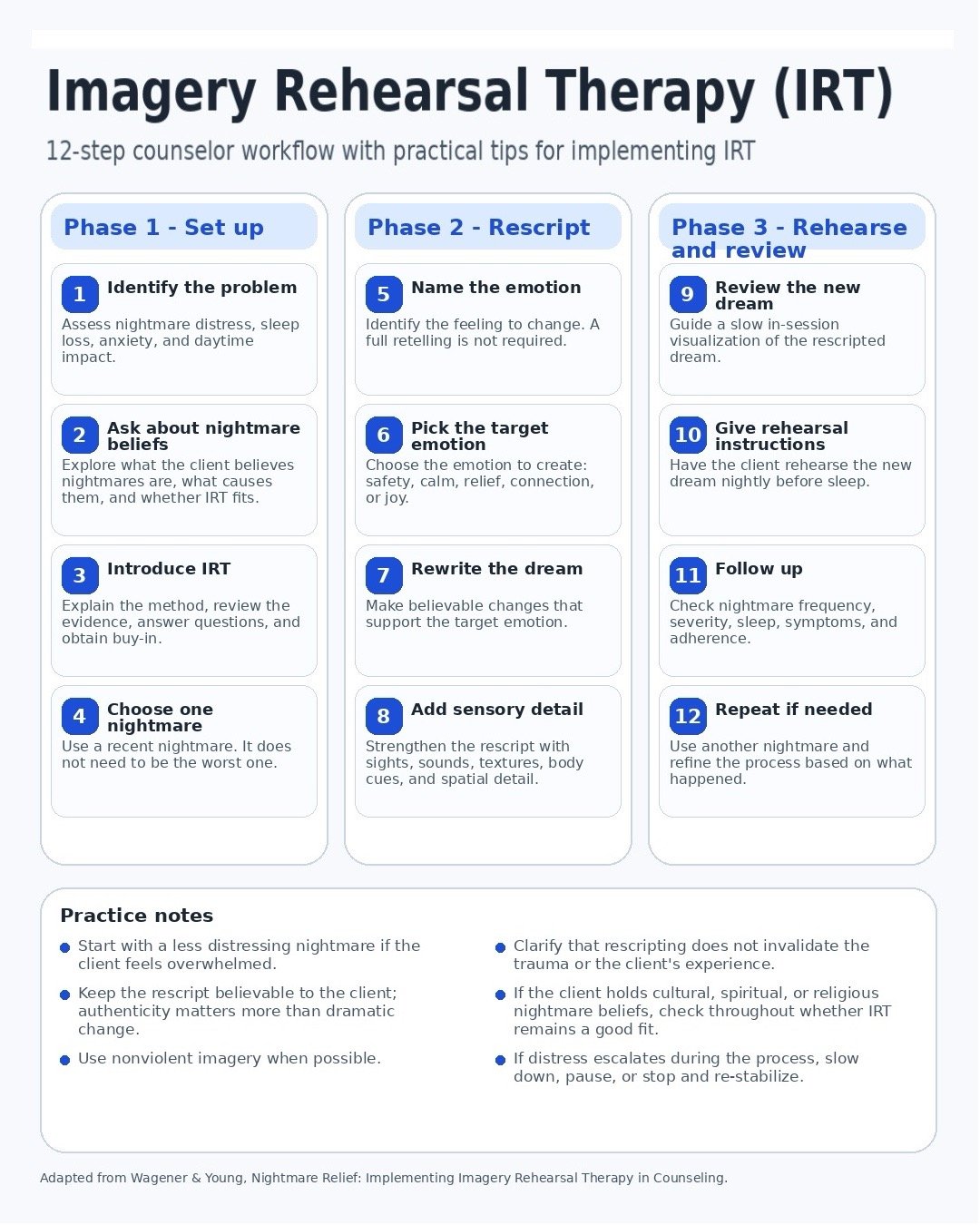
One of the most researched approaches to treating recurring nightmares is Imagery Rehearsal Therapy (IRT), an intervention that has demonstrated effectiveness in reducing nightmare symptoms. IRT involves working with an individual to change a distressing nightmare into a new version that is less disturbing and then mentally rehearsing the revised dream while awake. Through this process, individuals practice experiencing a different version of the nightmare rather than repeatedly encountering the original distressing experience.
IRT is generally a relatively brief intervention that can be incorporated into counseling and psychotherapy, including treatment for individuals experiencing trauma-related nightmares. Although the approach is straightforward, effective implementation involves more than simply asking someone to create a happier ending to a nightmare. Attention to the emotions associated with the nightmare, the individual's desired changes to the experience, and the details of the revised dream can help guide the process. Regular mental rehearsal of the revised dream is an important component of treatment, allowing the individual to become familiar with the new experience.
Culturally Responsive Nightmare Treatment
Although IRT has an established research foundation, the way individuals understand dreams and nightmares can influence how they respond to treatment. Some individuals view nightmares primarily as psychological experiences, while others understand them through cultural, religious, or spiritual beliefs that may affect whether changing a nightmare feels appropriate or desirable. These differences are important considerations when introducing and implementing IRT.
In our 2025 article, Nightmare Relief: Implementing Imagery Rehearsal Therapy in Counseling, J. Scott Young and I describe an approach to using IRT in counseling that incorporates attention to clients' cultural beliefs and experiences. This includes understanding how clients view their nightmares and ensuring that the changes made during treatment are consistent with their beliefs, preferences, and desired emotional experiences. Incorporating these considerations allows counselors to approach nightmare treatment in ways that are both responsive to the individual and grounded in established clinical practices.